CfA: UC Stone Center & Bocconi University Summer School on Socioeconomic Inequality and Mobility (deadline 15 maggio 2026)
Summer School on Socioeconomic Opportunity and Inequality at the Istituto per gli Studi di Politica Internazionale, June 29-July 3, 2026. Il Centro Dondena per la Ricerca sulle Dinamiche Sociali è lieto di annunciare la Summer School on Socioeconomic Opportunity and Inequality, co-organizzata assieme allo Stone Center for Research on Wealth Inequality and Mobility (Chicago) e…
CfP: WEast 2026 Belgrade Workshop, Long-Run Economic Growth and Development in East, Central, and South-East Europe (deadline 15 maggio 2026)
26-27 August 2026, Institute of Economic Sciences, Belgrade, Serbia Overview This workshop explores the historical drivers of long-run economic growth and development in East, Central, and South-East Europe. We invite contributions examining the economic, social, political, institutional, and cultural factors shaping development in the region from a long-run perspective. Submissions from economic and business history,…
Contributi di ARiSE al sostegno dell’attività di ricerca post-dottorale (2026)
Perseguendo una delle proprie linee programmatiche, il sostegno alla ricerca delle giovani generazioni di studiose e studiosi, ARiSE mette a disposizione la somma complessiva di Euro 3.000 per finanziare due tipi di borse di studio destinate al sostegno di attività di ricerca post-dottorale per progetti di carattere storico-economico: 1) Borse di ricerca: contributi fino a…
- CfA: UC Stone Center & Bocconi University Summer School on Socioeconomic Inequality and Mobility (deadline 15 maggio 2026)Summer School on Socioeconomic Opportunity and Inequality at the Istituto per gli Studi di Politica Internazionale, June 29-July 3, 2026.
Il Centro Dondena per la Ricerca sulle Dinamiche Sociali è lieto di annunciare la Summer School on Socioeconomic Opportunity and Inequality, co-organizzata assieme allo Stone Center for Research on Wealth Inequality and Mobility (Chicago) e con il supporto di ISPI – Istituto per gli Studi di Politica Internazionale. La summer school avrà luogo tra il 29 giugno e il 3 luglio 2026 a Milano e consisterà di un convegno di due giorni, sul tema “Inequality and the Future”, presso l’Università Bocconi, seguito da una scuola di specializzazione di tre giorni, presso l’ISPI (sede di Palazzo Clerici). Le iscrizioni sono rivolte a giovani studiosi (advanced PhD students & early career faculty); la scadenza per le iscrizioni è il 15 maggio.
Le domande d’iscrizione vanno effettuate tramite questo link. - CfP: WEast 2026 Belgrade Workshop, Long-Run Economic Growth and Development in East, Central, and South-East Europe (deadline 15 maggio 2026)26-27 August 2026, Institute of Economic Sciences, Belgrade, Serbia
Overview This workshop explores the historical drivers of long-run economic growth and development in East, Central, and South-East Europe. We invite contributions examining the economic, social, political, institutional, and cultural factors shaping development in the region from a long-run perspective. Submissions from economic and business history, economics, political science, and related disciplines are welcome. PhD candidates and early career researchers are particularly encouraged to apply.
SubmissionPlease submit a full paper or extended abstract, along with a CV, by 15 May 2026 to weast2026belgrade@gmail.com. Full papers will be given preference. Authors will be notified of the outcome by the end of May 2026.
Practical informationLunch, refreshments and dinner will be provided during the workshop. There is no participation fee. Participants are expected to cover their own travel and accommodation expenses. Stipends may be available to support the participation of junior researchers.
Keynote: Jared Rubin (Chapman University) For further information about WEast, please visit this link. Organisers Emilija Cvetković (Institute of Economic Sciences) Stefan Nikolić (Loughborough University) - Contributi di ARiSE al sostegno dell’attività di ricerca post-dottorale (2026)
Perseguendo una delle proprie linee programmatiche, il sostegno alla ricerca delle giovani generazioni di studiose e studiosi, ARiSE mette a disposizione la somma complessiva di Euro 3.000 per finanziare due tipi di borse di studio destinate al sostegno di attività di ricerca post-dottorale per progetti di carattere storico-economico:
1) Borse di ricerca: contributi fino a 1.000€ per effettuare ricerche in archivi e biblioteche o per condurre ricerche sul campo;
2) Borse per la partecipazione a conferenze: contributi per partecipare a conferenze in Italia (per un massimo di euro 250,00) o all’estero (per un massimo di euro 500,00) per presentare le proprie ricerche;
Il bando è destinato alle ricercatrici/ori che hanno conseguito il dottorato di ricerca da non più di cinque anni alla data di scadenza del bando (ovvero non prima del 1° gennaio 2021).
Le domande di partecipazione, da prepararsi compilando il modulo del bando allegato e accompagnate da un breve CV e un budget previsionale, andranno inviate ad arise.segreteria@gmail.com entro il 15 maggio 2026.
Il Direttivo ARiSE valuterà le richieste e comunicherà i destinatari dei contributi entro il 31 maggio 2026. L’erogazione delle borse avverrà ad attività svolta, in seguito a breve rendicontazione integrata dai giustificativi di spesa.
I borsisti saranno invitati a illustrare brevemente gli esiti del loro progetto in occasione del Convegno annuale ARiSE.
- CfP: ESSHC session call “Women in Business and Finance: their Presence, Roles, Tasks from the Middle Ages to Modern Times” (deadline 9 aprile 2026)European Social Science History Conference, Lyon 2027, April 21-24 Organisers : Selin Dilli (Utrecht University) and Manuela Martini (Universté Lumière Lyon 2)
Over the past decades, historical research has increasingly documented women’s involvement in business and financial activities as investors, traders, administrators, innovators, corporate leaders, and business owners across different regions of the world since at least the early modern period (e.g., Beachy et al. 2006; Craig 2015; Dejardin, 2019; Aston and Bishop 2020; Effosse 2021; Le Chapelain 2024). This growing body of literature also highlights how women’s economic activities were embedded in broader transformations in trade, business organization, financial systems, legal frameworks, and social norms. It emphasizes the interaction between these structural conditions, which shaped opportunities and constraints for women in business and finance, and the strategies women developed to navigate them. While previous research has been crucial for challenging the idea that these women in business and finance were not exceptional and for understanding the historical conditions behind their activities, we still know very little about the similarities and differences among this diverse group of business and finance women with different motivations and needs, such as in terms of loans, networks, and skills. This session aims to examine how such a comparison among these groups of women can be meaningful and, therefore, invites contributions that analyze women’s involvement in business and finance from the Middle Ages to the present. We welcome papers addressing a wide range of activities, including investment, finance, corporate governance, entrepreneurship, trade, business ownership, and participation in family firms. Contributions from all geographical regions are encouraged, with special attention given to expanding geographic diversity in the field.
Possible questions include, but are not limited to: 1. How did the nature and extent of women’s participation in business and finance change over time? 2. How did cultural norms, legal institutions, and economic changes shape women’s opportunities and roles in business and finance? When and how did these mechanisms differ among women in business and finance? 3. Who were their partners? To what extent was their business an individual or collective adventure?We also welcome methodological contributions that reflect on sources and methods for studying women’s economic activity, such as the use of company archives, financial records, and business registers for women’s labour and business history.
Interested participants are invited to submit a 300-word abstract and a short bio to s.dilli@uu.nl and manuela.martini@univ-lyon2.fr by 9 April. Authors will be notified of the outcome of the selection in mid-April.
- CfP: “Quota 90”, numero monografico de “Il Pensiero Economico Italiano” (deadline 1 marzo 2027)“Il Pensiero Economico Italiano”, Fabrizio Serra Editore, Pisa-Roma
Nel 2027 ricorre il centesimo anniversario dal raggiungimento di Quota 90, con riferimento al tasso di cambio che il regime fascista ambiva a conseguire contro la sterlina inglese. Una decisione assunta già a partire dall’anno precedente, il 1926, quando il tasso di cambio della lira contro sterlina era ad oltre 150. La violenta deflazione, che al di là della narrazione ufficiale era sostanzialmente strumentale ad acquisire la credibilità necessaria per poter chiedere prestiti sui mercati finanziari internazionali, fu pagata con una forte diminuzione della quota salari sul reddito, un crescente modello produttivo di import substitution, la battaglia del grano ed una significativa ristrutturazione del debito. Il ricordo di quelle vicende intende essere l’occasione per ripercorrere le alterne scelte di politica monetaria (in un più ampio quadro di vincoli ed opportunità nazionali, europee e mondiali e del loro legame con gli altri strumenti della politica economica) assunte in Italia da quel momento fino all’avvento dell’euro, quando (almeno formalmente) la sovranità della politica monetaria si è spostata a Francoforte. Il Pensiero economico italiano ha deciso di dedicare a questi temi un numero monografico, con l’obiettivo di ripercorrere alcuni degli episodi più caratteristici di tale evoluzione, cercando di mettere in relazione fra loro eventi, teorie economiche e scelte politiche. In questa ottica e nel rispetto del tema proposto, il numero accoglie, in uno spirito di massima inclusività, contributi dedicati a tale ricostruzione storica. Il numero sarà curato da Marco Cini (marco.cini@unipi.it) e Fabio Masini (fabio.masini@uniroma3.it). La scadenza per la consegna dei contributi, già sottoposti a referaggio, è il 1° marzo 2027. I contributi potranno essere in italiano o inglese. Non ci sono limiti di dimensioni. Tutte le comunicazioni dovranno essere inviate ai curatori.
The year 2027 marks the centenary of the achievement of the so-called Quota 90, the exchange rate against the British pound that the Fascist regime sought to establish. The decision had already been taken the previous year, in 1926, when the lira–pound exchange rate had exceeded 150. The severe deflationary policy adopted to reach this target—beyond the official narrative—was largely instrumental in securing the credibility required to obtain loans on international financial markets. Its costs were reflected in a sharp reduction in the wage share of national income, the progressive adoption of an import-substitution development model, the Battle for Grain, and a substantial restructuring of public debt. The centenary provides an opportunity to reconsider the evolving choices of monetary policy adopted in Italy from that moment until the advent of the euro. These developments can be understood only within a broader framework of national, European, and global constraints and opportunities, as well as in relation to the interaction between monetary policy and other instruments of economic policy. With the introduction of the euro, the sovereignty of monetary policy shifted—at least formally—to Frankfurt. Il Pensiero economico italiano has decided to devote a special issue to these themes. The aim is to revisit some of the most significant episodes in this historical trajectory and to explore the relationships between economic events, theoretical developments, and policy choices. Within this framework, and in keeping with the proposed theme, the issue welcomes contributions that contribute to this historical reconstruction, in a spirit of broad inclusiveness. The special issue will be edited by Marco Cini (marco.cini@unipi.it) and Fabio Masini (fabio.masini@uniroma3.it). The deadline for the submission of contributions—already peer-reviewed—is 1 March 2027. Submissions may be written in either Italian or English, and no length restrictions are imposed. All correspondence should be addressed to the editors.
- Comunicare la complessità: la collana History Briefs (23 marzo 2026)
CNR – Polo Umanistico di Napoli
Il CNR-DSU presenta un seminario dedicato alla collana editoriale History Briefs: genesi, sviluppo e prospettive di una collana scientifica quadrimestrale, ad accesso gratuito, pensata per proporre a un pubblico ampio i risultati della ricerca storica e storiografica del CNR. L’incontro prende spunto dall’uscita del numero inaugurale — History Matters — e riunisce ricercatrici e ricercatori degli istituti del Dipartimento insieme a docenti universitari e rappresentanti istituzionali.
- CfP: 15th IBEO Workshop Economic History Annual Meeting (deadline 20 aprile 2024)Alghero, Sardinia, July 9, 2026
The 15th IBEO Workshop, organized by Università di Sassari, CRENoS and Università di Corsica, consists of 6 events spanning a range of fields in economics, taking place in Alghero, Sardinia, and in Corte, Corse, in June-July 2026. The Economic History session is set to take place in Alghero on July 9th, 2026. The aim of the session is to present and discuss state-of-the-art works in economic history that are able to highlight the complementarities between economics and economic history, and contribute to the cross-fertilisation of the two fields. In the spirit of showcasing the span of topics and methods in economic history, the organisers welcome proposals on any historical period and geographical area, and espousing any approach, from “traditional” economic history, to cliometrics and historical economics.
Organizing committee: Paolo Di Martino (Università di Torino), Giulia Mancini (Università di Sassari), Alessandro Nuvolari (Scuola Superiore Sant’Anna). The meeting is supported by ASE (Associazione per la Storia Economica). The deadline for application is April 20, 2026. Authors are invited to submit a draft paper or long abstract (about 1,000 words, 3 to 5 keywords). The organizers will send notifications of acceptance or rejection by May 4, 2024. To submit your paper to the economic history meeting, visit this link. - CfP: Condire la pasta. Industrie, culture e linguaggi tra Medioevo ed età contemporanea (deadline 15 maggio 2026)Parma, 19-21 novembre 2026
Il convegno internazionale “Condire la pasta” intende esplorare, in prospettiva storica e comparata, il ruolo della pasta e delle sue modalità di accompagnamento nella costruzione di pratiche alimentari, culture del gusto, sistemi produttivi e rappresentazioni simboliche, dal Medioevo all’età contemporanea. Attraverso un approccio interdisciplinare, il convegno mira a intrecciare storia dell’alimentazione, cultura materiale, storia economica e media studies, ponendo attenzione tanto alle pratiche quotidiane quanto ai processi di nazionalizzazione della pasta in diversi contesti culturali, con particolare riferimento alla costruzione del made in Italy, senza escludere altre tradizioni nazionali che hanno contribuito alla sua diffusione e reinterpretazione. Da alimento largamente associato ai ceti popolari, la pasta è divenuta nel corso del Novecento uno dei simboli più riconoscibili dell’identità italiana, diffondendosi ben oltre i confini nazionali. La sua storia è segnata da circolazioni, adattamenti e contaminazioni che fanno della pasta un esempio paradigmatico di nomadismo gastronomico. In questo quadro, il condire assume un ruolo centrale: è il gesto che definisce il piatto, ne costruisce il significato culturale e ne determina il nome, rendendo il binomio pasta-condimento un potente dispositivo simbolico, economico e mediatico.
Per maggiori informazioni riguardanti gli assi tematici di interesse, si prega di consultare la call for papers completa al seguente link (click for the call for papers in English and French). Gli interessati sono invitati a inviare: • un abstract (max 250 parole), • un breve CV bio-bibliografico (max 250 parole), specificando il titolo del contributo, l’affiliazione istituzionale e la lingua dell’intervento. Le proposte devono essere inviate all’indirizzo condirelapasta@gmail.com mettendo in copia centro@progettopasta.com Scadenza per l’invio degli abstract: 15 maggio 2026 Lingue del convegno: Italiano, inglese e francese. Il convegno è organizzato da Università di Parma DISEA, CISPAI, Musei del cibo della Provincia di Parma e IEHCA (Tours). Comitato scientifico BIENASSIS Loïc – IEHCA D’ATRI Stefano – Università di Salerno e Presidente Cispai DESSAUX Pierre-Antoine – Université de Tours, IEHCA DI NUZZO Annalisa – Università Suor Orsola Benincasa Napoli GONIZZI Giancarlo – Musei del cibo della Provincia di Parma MAFFI Luciano – Università di Parma MAGAGNOLI Stefano – Università di Parma MAZZOTTI Omar – Università di Parma MILITI Manuela – Università di Salerno PAZZAGLI Rossano – Università del Molise - Taxation, Public expenditure, and Economic inequality in preindustrial Venetian Lombardy (1400-1800)
Il progetto Taxation, Public expenditure, and Economic inequality in preindustrial Venetian Lombardy (1400-1800), che ha ricevuto il finanziamento della Fondazione Cariplo (194.250 euro), esamina il ruolo delle istituzioni pubbliche nella gestione delle disparità economiche nei distretti lombardi durante il periodo della dominazione veneziana. L’analisi prende avvio da due interrogativi fondamentali, che si collocano nel consolidato ambito storiografico della misurazione delle disuguaglianze economiche con metodi statistici. A tal fine, viene utilizzato uno strumento codificato come l’indice di Gini, per quantificare la distribuzione della ricchezza. Un passaggio fondamentale per delineare un contesto economico in cui anche all’interno dello Stato veneziano di Terraferma gli studi precedenti hanno evidenziato l’emergere del cosiddetto “stato fiscale-militare”. Questa definizione indica da un lato (a) l’intenso aumento della spesa pubblica (soprattutto militare, che nello stato veneziano sestuplica tra la metà del Trecento e la metà del Cinquecento), a beneficio principale di grandi appaltatori e alta finanza che investivano nel debito pubblico; dall’altro (b) la crescita parallela della tassazione diretta regressiva (aumentata in questi territori tra il 20% e il 50% nella prima età moderna).
Su queste basi, la ricerca investiga innanzitutto (1) come le istituzioni pubbliche locali e le loro politiche fiscali ed economiche potessero incidere sulle dinamiche di disparità, sia accentuandole che attenuandole. In secondo luogo, (2) viene introdotto un innovativo strumento di misurazione di natura qualitativa: la disuguaglianza socio-politica nell’accesso ai processi decisionali. L’obiettivo è misurare l’effettivo coinvolgimento della cittadinanza – o, più specificamente, di quali settori e famiglie di essa ed il loro variare (o meno) nel tempo – nelle scelte relative all’economia pubblica, e quali fossero le conseguenze in termini di decisioni tributarie e di ricorso ad altri strumenti per la formulazione del bilancio della comunità; ad esempio, nella gestione dei beni comuni a fronte del crescere della disuguaglianza.
Le fonti selezionate per questo studio si fondano su tre pilastri principali: (i) gli estimi, utilizzati per misurare la distribuzione della ricchezza tramite l’indice di Gini; (ii) i bilanci comunali, finalizzati alla costruzione di un database che includa i dati sulle entrate pubbliche e la loro redistribuzione; e (iii) i registri dei consigli comunali, esaminati per evidenziarne la composizione politica e concentrarsi sul rapporto tra la gestione elitaria della procedura di tassazione, delle proprietà comuni e della ridistribuzione dei redditi pubblici, al fine di osservarne la potenziale relazione con l’aumento della disuguaglianza economica. I dati saranno raccolti attraverso lo spoglio di documentazione archivistica ancora largamente inedita, conservata principalmente negli archivi comunali dei casi di studio distribuiti nelle province di Bergamo e Brescia.
In conclusione, l’esito del progetto mira a produrre una migliore comprensione delle dinamiche della disuguaglianza economica nel medio e lungo periodo in questa regione, con l’obiettivo di ricostruirne sia le cause, sia le politiche che produssero le diverse traiettorie che tali disparità assunsero nel tempo, tenendo presente che la disuguaglianza economica si accompagnava strettamente alla disuguaglianza nell’accesso ai processi decisionali. In tal senso, di particolare importanza risulterà la possibilità di confrontare le strategie tributarie e di bilancio tra centri urbani capodistretto, centri minori e comunità rurali, al fine di compararne similitudini e differenze. Queste variazioni saranno studiate come conseguenza sia dei margini di potere politico-fiscale delegato dalla Repubblica, sia delle specifiche condizioni economiche e ambientali in cui i diversi contesti si collocavano.
Componenti:
Matteo Di Tullio (Università degli Studi di Pavia) – Principal Investigator
Giulio Ongaro (Università degli Studi di Milano-Bicocca)
Martino Lorenzo Fagnani (Università degli Studi di Pavia)
Francesco M. S. Fiore Melacrinis (Università degli Studi di Milano-Bicocca)
Martina Motta (Università degli Studi di Pavia)
Rachele Scuro (Università degli Studi di Pavia)
Tommaso Somigli Russotto (Università degli Studi di Milano-Bicocca)Durata: 2 anni (Giugno 2025/Maggio 2027)
- Charity Professionals and Charity Governance (15th-19th centuries) (19-20 marzo 2026)
Workshop internazionale, Fondazione Banco di Napoli, Napoli.
Il workshop internazionale è promosso dall’Istituto di Storia dell’Europa Mediterranea (ISEM) del CNR, dalla Fondazione Banco di Napoli, dalla Fondazione del Monte di Bologna e Ravenna, dal Centro Studi sui Monti di Pietà e sul Credito Solidale e dall’Università di Graz.
L’iniziativa riunisce studiosi italiani e stranieri per analizzare, in prospettiva comparata, le forme di gestione e governance delle istituzioni caritative tra età moderna e XIX secolo, con particolare attenzione a ospedali, monti di pietà, opere pie e reti assistenziali.
Apriranno i lavori Orazio Abbamonte (Presidente Fondazione Banco di Napoli e
Paola Avallone (Direttrice Istituto di Storia dell’Europa Mediterranea).Nei due giorni del workshop sono previsti gli interventi di: Marco Dotti, Suzana Simon, Giovanni Gregorini e Luciano Maffi; Francesco Fiore Melacrinis, Joseph Corpis, Antonella Pisano e Raffaella Salvemini; Luigi Abetti, Giulia Gioeli, Francesca Ferrando, Alice Boeri, Marilena Iacobaccio e Mario Quagliarello; Nicola Lorenzo Barile, Martino Lorenzo Fagnani, Giocomo Lorandi, Matteo Moro.
Comitato scientifico: Paola Avallone, Mauro Carboni, Tanjia Skambraks.
- Ricordando Giorgio Borelli
E’ venuto a mancare, all’età di 85 anni, il prof. Giorgio Borelli, docente emerito dell’Università di Verona.
Veronese di nascita, laureato in Giurisprudenza presso l’Università di Bologna, ha insegnato presso gli atenei di Padova, Trento e Sassari, prima di diventare, nel 1976, professore ordinario di Storia Economica presso quella che sarebbe diventata, nel 1982, l’Università di Verona.
E’ stato membro del Comitato scientifico dell’Istituto internazionale di Storia economica “Francesco Datini” di Prato e della Giunta esecutiva. E’ stato membro della Deputazione veneta di Storia patria, dell’Accademia di Agricoltura Scienze e lettere di Verona, della Società degli storici dell’economia (SISE), della Società degli Storici italiani, nonché membro del Comitato scientifico della rivista “Il pensiero economico moderno”.
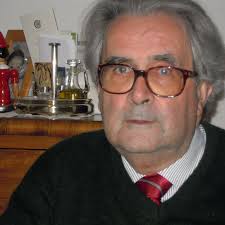
Crediti immagine: Università di Verona, dalla pagina Giorgio Borelli
Nel corso degli anni ha ricoperto, inoltre, gli incarichi di Presidente dell’Istituto per gli Studi storici veronesi, di Direttore scientifico della rivista “Studi Storici Luigi Simeoni”, e di Preside della Facoltà di Economia e Commercio (dal 1982 al 1994).
Autore di numerosi lavori scientifici riguardanti la storia economica in età moderna e contemporanea, focalizzati particolarmente su fiscalità, protoindustria, corporazioni di mestieri, proprietà agraria e capitalismo.
- Letture: No revenge of the places that don’t matter? Evidence from Italy’s Cassa per il Mezzogiorno, di Tancredi Buscemi
Questo studio esamina l’impatto del decentramento di un ampio programma di sviluppo regionale per il Mezzogiorno, la Cassa per il Mezzogiorno, attraverso la lente dell’ipotesi di modernizzazione passiva (Felice e Vasta, Eur Rev Econ Hist 19(1):44–66, 2015). Si concentra sul ruolo delle istituzioni locali nell’esacerbare le disuguaglianze regionali e ostacolare la crescita economica del Mezzogiorno. Questo articolo verifica l’ipotesi che la devoluzione del programma di investimenti pubblici ne abbia minato l’efficacia, danneggiando attivamente la convergenza regionale. Utilizzando il metodo di controllo sintetico, i risultati rivelano che il decentramento delle politiche di sviluppo nel 1971 ha portato a una perdita totale dell’11% del PIL pro capite per il Mezzogiorno nel decennio successivo, gettando nuova luce sulla rinascita del divario regionale italiano nella seconda metà del XX secolo. L’articolo è open access scaricabile dal sito della rivista Cliometrica 20 , 185–220 (2026).
- CfP: The dynamics of inequality: long-term perspectives (deadline 12 aprile 2026)University of Florence (Italy), September 17–18, 2026
The Department of Economics and Management (DISEI), University of Florence, invites submissions for the workshop “The Dynamics of Inequality: Long-Term Perspectives,” to be held at the Novoli Campus in Florence on September 18–19, 2026. This interdisciplinary workshop aims to bring together economists, economic historians, sociologists, demographers, and statisticians working on the long-term evolution of inequality. The goal is to foster dialogue across disciplines, theoretical approaches, empirical strategies, and data sources, with particular attention to historical processes and long-run dynamics.
Topics include (but are not limited to): – Long-term trends in income, wealth, education, and health inequality – Intergenerational mobility and persistence – Inequality of opportunity in historical perspective – Longitudinal and historical microdata – Theoretical perspectives on long-run inequality dynamics – Climate change, ecological transition, and inequality – Historical and forward-looking analysesThe workshop will feature a keynote lecture by Guido Alfani (Bocconi University), contributed paper sessions, and a poster session. Participation is limited to approximately 25 presenters in order to encourage in-depth discussion. Submissions from PhD students and early career researchers are particularly welcome.
Please submit a full paper, draft paper, or extended abstract to: annaelena.valentini@unifi.it Submission deadline: April 12, 2026 Notification of acceptance: May 1, 2026 There are no participation fees. Participants are expected to cover their own travel and accommodation expenses. Scientific Committee: Francesco Ammannati Paolo Brunori Silvia Leoni Laura Sabani Annaelena Valentini - EEBL Talk (26 March – University of Rome Tor Vergata)
EEBL Talk will take place on 26 March at 11:00 in Sala del Consiglio, Building B, School of Economics, University of Rome Tor Vergata, Via Columbia 2, 00133 Rome.
guest speaker will be Prof. Jordi Martí-Henneberg.
The title of the talk is:“Boundary Changes”
The lecture will examine the changing borders of Europe over the past two centuries and their political, social, and economic implications, with a look at current geopolitical developments.
Please register in advance to attend by filling out the following form:
- Fifth CISEPS Annual Workshop 2026
Economic inequality, political inclusion, and public finance (April 16-17, 2026) University of Milano-Bicocca
Il 16 e il 17 Aprile si terrà il 5th CISEPS Annual Workshop presso l’Università Milano – Bicocca.
- Appel à candidature – contrat doctoral – ANR MILL-EHNA
Section CNU : 06 (sciences de gestion)
Date de financement de thèse : 1er septembre 2026-31 août 2029
Lieu : La Rochelle Université, laboratoire NUDD
Directeurs de thèse : Pierre Labardin et Angelo Riva (pierre.labardin@univ-lr.fr, anriva@inseec.com)
Cadre du projet : Ce projet entend répondre à une préoccupation sociétale majeure : comprendre de manière diachronique la structuration des récits collectifs portant sur l’(il)légitimité du profit des entreprises ainsi que leurs conséquences, au moyen d’une recherche résolument interdisciplinaire (informatique, histoire, économie, sciences de gestion). S’inscrivant dans le sillage de la narrative economics, il repose sur l’hypothèse centrale selon laquelle les récits constituent en eux-mêmes des moteurs actifs de l’économie et offrent un instrument précieux pour l’analyse des politiques publiques. Le programme scientifique se décline en trois volets : (1) Concevoir et mettre en œuvre une méthodologie innovante fondée sur les Large Language Models (LLM) afin d’identifier avec précision les récits dans le contexte d’événements historiques ; (2) Étudier l’émergence, la structuration et la diffusion des récits relatifs à la (dé)légitimation du profit des entreprises dans la première moitié du XXᵉ siècle, à partir de l’analyse d’un vaste corpus historique de presse et de documents numérisés disponibles dans Gallica ; (3) Évaluer les conséquences de ces récits sur les fluctuations du profit, à travers leur influence sur les politiques fiscales et les pratiques comptables et managériales des entreprises, en mobilisant à la fois les sources émanant des pouvoirs publics conservées dans Gallica et les données comptables des sociétés cotées à la Bourse de Paris, issues de l’Equipex DFIH et enrichies par la collecte des rapports annuels. L’ensemble vise ainsi à établir un lien original entre les dynamiques macroéconomiques et les comportements microéconomiques des firmes.
Projet de thèse : Dans le cadre de ce projet interdisciplinaire, la thèse a pour objectif de retracer et d’analyser les discours relatifs au profit des entreprises ainsi que leurs conséquences. Elle porte plus particulièrement sur l’émergence, la structuration et la diffusion des récits de (dé)légitimation du profit dans la première moitié du XXᵉ siècle. Elle examine également l’incidence de ces récits sur les fluctuations du profit, en s’attachant à leur influence sur les politiques fiscales et sur les pratiques comptables des entreprises. Un enjeu scientifique central du projet réside dans le développement d’un outil d’intelligence artificielle dédié au traitement des textes historiques. La thèse contribuera à cet objectif en articulation étroite avec un autre projet doctoral en informatique mené à l’Université de La Rochelle, inclus dans le consortium du projet.
Cadre du laboratoire : le laboratoire NUDD (usages du NUmérique pour le Développement Durable, https://nudd.univ-larochelle.fr/) travaille sur les transformations permises par le numérique sur les objets de recherche.
Profil recherché : étudiante ou étudiant diplômé d’un master (ou en cours) en gestion, économie ou histoire avec une appétence pour le numérique.
Candidature : envoi d’un CV et d’unelettre de motivation avant le 30 avril 2026 à Pierre Labardin et Angelo Riva (pierre.labardin@univ-lr.fr, anriva@inseec.com)
- Seminario “Il governo economico del mondo, 1933-2013” (17 marzo 2026)
Martin Daunton, accademico britannico e autore de Il governo economico del mondo, Einaudi, 2025, terrà un seminario dal titolo “Il governo economico del mondo, 1933-2023”, martedì 17 marzo 2026, presso l’Università di Firenze, Dipartimento di Scienze Politiche, Novoli (edificio D5, aula 110, alle 14.00).
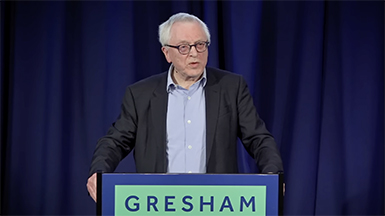
Crediti: immagine acquisita da https://www.martindaunton.co.uk/ - CfP: Workers and Politics (deadline 31 marzo 2026)University of Oxford, Friday 12 June 2026
This interdisciplinary conference seeks to investigate and draw lessons from moments, both contemporary and historical, in which workers navigated through, organized in, demonstrated against, and at times, successfully transformed the political orders in which they lived. While workers and other non-elite groups operate in circumstances that limit their range of possible action, there are moments and arenas in which the political space is more or less hostile to collective action. Put briefly, we seek papers on how labour related to politics in democratic, colonial, and authoritarian contexts in any time period and space. We are particularly interested in how workers interact and interacted with political authorities in conditions of increased hostility. We invite papers that place the investigations of workers and their relationship to state and non-state actors, particularly police and party-political actors in authoritarian, semi-democratic, and democratic political, social, and economic conditions. Papers that analyse the interaction between workers and political parties, military, police, and courts, (inter-)national and local public officials, planners, and administrators, and rural and urban authorities are especially welcome. Studies of workers’ experience of the stabilisation strategies of various forms of public and political authority are encouraged. We ask that papers concern themselves with a case within one (or more) countries in the following spatial arenas: Western Europe, Eastern Europe, North America, South America, the Middle East, Africa, East Asia, South Asia, and Australasia. Papers from across all humanities disciplines and the social and political sciences are gladly received.
If you would like to participate, please submit a paper abstract of 300 words (maximum) and a short note about yourself by 31 March to labournetwork@torch.ox.ac.uk. Pre-circulated papers are to be submitted to the organisers by 1 June 2025. There are no conference fees. National and international travel and accommodation support can be provided on request.
- Letture: How Extractive Was Russian Serfdom? Income Inequality in Moscow Province in the Early Nineteenth Century, di Elena Korchmina e Mikołaj Malinowski
Questa ricerca analizza l’impatto economico della servitù della gleba nella provincia di Mosca nel 1811, utilizzando nuovi dati d’archivio sui redditi delle famiglie. Gli autori dimostrano che la servitù era un’istituzione altamente estrattiva, capace di concentrare la ricchezza nelle mani di una ristretta élite aristocratica e mercantile. Lo studio evidenzia livelli estremi di disuguaglianza, con un coefficiente di Gini pari a 65, superando persino i parametri delle società contemporanee più diseguali. Sebbene esistesse una limitata mobilità sociale che permetteva ad alcuni ex servi di arricchirsi, la struttura feudale mantenne la maggior parte della popolazione a livelli di sussistenza. I risultati indicano inoltre che queste disparità economiche sono persistite nel tempo, rimanendo elevate anche dopo l’emancipazione dei servi nel 1861. In sintesi, il sistema fiscale regressivo e il controllo del lavoro forzato hanno creato una concentrazione di risorse paragonabile a quella degli odierni oligarchi russi. Questo articolo fa parte del progetto finanziato dalla Commissione Europea nell’ambito del bando Horizon 2020 (ID progetto 101027432). L’articolo è in open access sul sito della rivista The Journal of Economic History
- CfP: Invisible Finance: Women and Money in History, Middle Ages to the 20th century (deadline 15 maggio 2026)University of Milan, 11–12 September 2026
Despite increased female participation in economic education and greater access to financial markets, in the contemporary financial system women remain underrepresented in top positions, decision-making processes, and among major capital operators. This imbalance is not a recent phenomenon, but the continuation of long-term historical dynamics rooted in cultural, legal, and economic structures that have marginalized women in the financial sphere. The international conference Invisible Finance: Women and Money in History aims to examine the actual roles played by women in financial systems from the Middle Ages to the Twentieth Century. The conference lies at the crossroads between the fields of economic and financial history, gender history, legal history, and related disciplines.
Confined to the margins of high finance, large-scale trade, and public institutions, which have historically been dominated by male actors, women nevertheless acted as key figures within “informal” and shadow credit systems. In recent decades, historiography has highlighted women’s participation, particularly in more advanced economies, in stock markets and joint-stock companies, such as the Dutch East India Company (VOC) and the British East India Company (EIC). Despite these historiographical advances, significant chronological and geographical gaps remain in our understanding of how women engaged with money, credit, and financial institutions. The conference seeks to further explore women’s participation in the various spheres of finance and credit, paying particular attention to the roles they occupied within these networks; their access to information, financial instruments, and expertise; the resources available to them and the ways in which these were used; and the legal contexts within which such practices took place.
The conference welcomes contributions addressing, though not limited to, the following themes: • Women as financial intermediaries, creditors, and investors in the financial sector • Women’s participation in formal and informal financial markets • Women’s role in household finance and wealth management • Legal and regulatory frameworks shaping women’s access to property, credit, and financial markets • Comparative studies across different geographical and cultural contexts • The role of women in enslavement-based economies and/or colonial contexts • Social, cultural, and moral attitudes toward women’s economic activities • The influence of religion and belief systems on women’s engagement in finance • Religious institutions and women’s access to credit The conference aims to: • Promote research based on original archival sources and interdisciplinary approaches • Foster dialogue among scholars from diverse historiographical traditions • Expand the geographical and chronological scope of studies on women and finance • Encourage comparative and long-term perspectives • Discuss innovative methodologies for the study of women’s financial activitiesThe conference will be conducted in English. Scholars at any stage in their career are invited to submit a proposal in the form of an extended abstract (up to 350 words). Proposals must be submitted by 15 May 2026. Applicants will be notified of the outcome of the selection process by 15 June 2026.
Please send a copy of your proposal to all of the following: Marcella Lorenzini, University of Milan, Marcella.lorenzini@unimi.it Helen Paul, University of Southampton, H.J.Paul@soton.ac.uk Matteo Pompermaier, University of Brescia, Matteo.pompermaier@unibs.it Please include: • Title of the proposal • Abstract (max 350 words) • Short biographical note (max. 100 words) • Email subject line: Conference “Invisible Finance: Women and Money in History” 2026The conference will be conducted in person. Further details regarding the final programme will be communicated to those whose papers are accepted. iDEE Association offers four participation grants for non-tenured researchers (PhD candidates, research fellows, and postdoctoral scholars). The grants can be applied to travel, food, and lodging costs to a maximum of €300.
- CfP: European Social Science History Conference 2027 (deadline 15 aprile 2026)ENS, Lyon (France), 21-24 April 2027
The International Institute of Social History (IISH) invites to submit a paper and/or a panel proposals for the 16th edition of the European Social Science History Conference. The deadline for submission is April 15, 2026.
The aim of the ESSHC is bringing together scholars interested in explaining historical phenomena using the methods of the social sciences. The conference is characterized by a lively exchange in many small groups, rather than by formal plenary sessions. The conference welcomes papers and sessions on any historical topic and any historical period. It is organized in 28 thematic networks. We strongly encourage interdisciplinary and international sessions. More information on the conference and the links to the submission forms can be found on the ESSHC website: https://esshc.iisg.amsterdam If you have any questions about the conference, please feel free to contact us at esshc@iisg.nl . Should you run into technical issues with the platform, you can contact Oxford Abstract support via the link provided on the platform. Guidelines are available at this link. Use this link to submit a paper, and this one for a panel/session.PhD students are invited to enter their paper for the Prof. Jan Lucassen Award for best paper by a PhD student in the conference programme.
- Letture: Migration, Innovation and Knowledge Transmission. An Interdisciplinary Assessment of Italian Migration and its Socioeconomic Impact, a cura di Donatella Strangio
I quindici contributi contenuti in questo volume provenienti da tutto il mondo, presentano una serie di casi di studio e ricerche d’archivio che mostrano come la trasmissione di conoscenze e competenze, trasmesse dai migranti nei paesi di destinazione, rappresenti un aspetto meno noto ma cruciale del fenomeno migratorio. Si analizza l’impatto dei migranti italiani in una varietà di contesti, con le loro competenze imprenditoriali, professionali, manuali e artigianali che hanno contribuito in modo significativo allo sviluppo economico, culturale e industriale in paesi come Cile, Argentina, Brasile e Stati Uniti. Sono approfonditi temi più ampi come l’innovazione tecnologica, le pratiche educative, le politiche istituzionali e pubbliche e le esperienze di migrazione di breve durata o temporanea. Il quadro interdisciplinare del libro, che riunisce storici dell’economia, architetti e sociologi, promuove prospettive uniche e arricchisce la nostra comprensione dell’impatto economico della migrazione, andando oltre la semplice crescita economica lineare. Questo libro costituirà una risorsa preziosa per i ricercatori di storia economica e aziendale, così come per gli storici delle migrazioni, i sociologi e i demografi. Per qualsiasi informazione si veda il link dell’editore Springer Nature
- CfP: Seconda conferenza ARiSE / Second ARiSE conference (deadline 30 aprile 2026)
Napoli, 11-12 dicembre 2026
(English version below)La seconda conferenza ARiSE – Associazione Italiana per la Ricerca in Storia Economica si svolgerà nei giorni 11 e 12 dicembre 2026 a Napoli, presso l’Università degli Studi di Napoli Federico II e l’Università degli Studi di Napoli Parthenope.
Il comitato organizzatore valuterà proposte, in italiano e in inglese, su temi di storia economica senza limitazioni cronologiche, tematiche o metodologiche. Sono particolarmente apprezzate le proposte presentate da parte di giovani studiose e studiosi. È possibile sottoporre sia proposte di singoli paper sia proposte di intere sessioni (che includano un massimo di quattro paper).
Le proposte di paper dovranno includere: il titolo del contributo, il nome di tutti gli autori, un abstract di non più di 300 parole e i recapiti dell’autore corrispondente. Le proposte di sessione dovranno indicare, oltre a quanto già richiesto per ogni singolo paper, anche il titolo della sessione, il nome dell’organizzatore o degli organizzatori e una breve presentazione della sessione (non più di 200 parole). Ciascun autore/autrice non potrà presentare più di due paper. Sono benvenute proposte di sessione organizzate anche con/da altre associazioni scientifiche.
Le candidature dovranno essere inviate entro il 30 aprile 2026 all’indirizzo e-mail della segreteria ARiSE (arise.segreteria@gmail.com). L’esito della valutazione sarà comunicato entro il 15 giugno 2026. Gli autori/le autrici dei contributi accettati dovranno successivamente inviare un long abstract della propria presentazione entro il 15 novembre 2026.Riepilogo delle scadenze:
Termine per invio proposte di papers/sessioni: 30 aprile 2026
Comunicazione approvazione papers/sessioni: 15 giugno 2026
Invio long abstract: 15 novembre 2026Per i soci ARiSE, l’iscrizione al convegno richiede il versamento di una quota pari a 50,00 euro, che include i pranzi dei giorni 11 e 12 dicembre nonché la cena, aperta a tutti i partecipanti, che si terrà nella serata dell’11 dicembre. Per coloro che non sono soci ARiSE la quota è pari a 80,00 euro e comprende, oltre a quanto già specificato per i soci, anche l’iscrizione annuale ad ARiSE (pari a 50 euro). L’Associazione ricorda che, in occasione del convegno, si terrà anche l’assemblea annuale dei soci, durante la quale verranno eletti il nuovo Consiglio direttivo e il nuovo Presidente per il quadriennio 2027-30.
ARiSE mette a disposizione borse di partecipazione al convegno destinate a studiose e studiosi non strutturati (dottorandi/e, assegnisti/e di ricerca e borsisti/e post-doc). Le borse prevedono la copertura della quota di iscrizione alla conferenza e un contributo alle spese di viaggio, vitto e alloggio, fino a un massimo di 350 euro. Sul sito web di ARiSE (www.ariseweb.org) saranno presto pubblicate tutte le informazioni necessarie relative alle borse.In allegato a questo post, un riepilogo delle strutture ricettive e delle convenzioni riservate ai soci in occasione della conferenza. Si segnala che il mese di dicembre è un periodo di alta affluenza nella città di Napoli: si consiglia pertanto di provvedere con anticipo alla prenotazione dell’alloggio.

2nd ARiSE conference, call for papers
Naples, 11-12 December 2026ARiSE (Associazione Italiana per la Ricerca in Storia Economica) will hold its second conference on 11-12 December 2026 in Naples. The event is jointly hosted by the University of Naples Federico II and the University of Naples Parthenope.
The organizing committee invites submissions, in Italian and English, on any topic in economic history, without chronological, thematic or methodological restrictions. Proposals from early-career scholars are particularly encouraged. Both individual paper proposals and complete sessions proposals (up to four papers) may be submitted.
Paper proposals must include: the title, the names of all authors, an abstract of no more than 300 words, and the corresponding author’s contact details. Session proposals must include, in addition to the information required for each, the session title, the name(s) of the organizer(s), and a brief session description (up to 200 words). Each author may present no more than two papers. Sessions organized jointly with or by other scholarly associations are also welcome.
Submissions should be sent by 30 April 2026 to arise.segreteria@gmail.com. Authors will be notified of acceptance by 15 June 2026. Authors of accepted contributions will be required to submit a long abstract of their presentation by 15 November 2026.Summary of deadlines:
Submission deadline for paper/session proposals: 30 April 2026
Notification of acceptance: 15 June 2026
Submission of long abstract: 15 November 2026For ARiSE members, the conference fee is 50€, which covers lunches on 11 and 12 December and the conference dinner on the evening of 11 December. For non-members, the fee is 80€ and also includes one year of ARiSE membership (50€). The Association’s annual meeting will also take place during the conference, at which the new Board and President for the 2027-2030 term will be elected.
ARiSE offers participation grants for non-tenured scholars (PhD candidates, research fellows, and postdoctoral fellows). The grants cover the conference registration fee and provide a contribution to cover for travel, meals, and accommodation expenses up to a maximum of €350. More information on the grants will be published on ARiSE website soon.Attached to this post is a summary of the accommodation options and the special rates reserved for members for the conference. Please note that December is a peak tourist season in Naples; early accommodation booking is therefore recommended.
Il Comitato organizzatore / The organizing committee
Maria Carmela Schisani (Università degli Studi di Napoli Federico II)
Sergio Sardone (Università degli Studi di Napoli Federico II)
Silvana Bartoletto (Università degli Studi di Napoli Parthenope)
Paola Avallone (ISEM-CNR)
Raffaella Salvemini (ISEM-CNR)
Vittoria Ferrandino (Università degli Studi di Benevento)
Matteo Pompermaier (Università degli studi di Brescia) - CfP: Strikes and Social Conflicts in Hostile Environments (deadline 31 maggio 2026)Invitation to Submit Articles to Workers of the World, online journal of the International Association of Strikes and Social Conflicts (IASSC)
Following a highly successful International Association of Strikes and Social Conflicts conference held in Washington, DC in September last year, we are now extending an invitation for submissions of articles on the conference’s broad theme of ‘Strikes and Social Conflicts in Hostile Environments’ (see below) for publication in our journal Workers of the World later in 2026. While workers and other subordinate groups are always operating under conditions that limit their range of action—that is, circumscribing the kinds of protest demands or action repertoires that are considered normative or acceptable—there are historical periods and geographical spaces in which the environment is especially hostile to collective action from below. Our premise is that we have entered one of these especially hostile periods on a global scale. As such, there is an urgent need to examine and draw lessons from instances (both contemporary and historical) in which subordinated groups navigated through, organised in, protested against, and at times, successfully transformed the ‘hostile environments’ in which they were embedded. Historically, many would point to the labour repressive colonial regimes and the spread of fascist movements in the first half of the twentieth century as one example of a period of widening/deepening ‘hostility’ on a global scale. Likewise, the early-twenty-first century, with the current global resurgence of fascist and far right regimes and movements in new forms, can be understood as another period of widening/deepening hostility. At the same time, spatial unevenness of hostile environments has been central to the functioning of historical capitalism in any given period. For example, in the decades after the Second World War, the apartheid regime in South Africa and military dictatorships in Latin America and East Asia existed at the same time that the right of workers to strike and form independent trade unions were at their height in many core countries. Equally important, workers in the same location (e.g., within the same country, city, workplace) are regularly divided between those who are ruled through consent and those who feel the brunt of the hostility—with distinctions drawn along the lines of gender, migration/citizenship, race/ethnicity, urban/rural, etc. Finally, even in the darkest periods in world history, there have been local pockets of hope in which successful mobilisations around (and advances of) labour rights and social justice have prevailed. Here we might think of the settlements established by enslaved people who had escaped from bondage (marronage); or Rojava, the autonomous polyethnic socialist regime established in (12/16/2024) northeast Syria in the midst of the Syrian Civil War; or the experiences of other liberated areas in the midst of wars and revolutions.
Call for ArticlesIn line with the above discussion, we would especially welcome articles focused on: -case studies of strikes and social conflicts under colonial, fascist, neofascist, far-right, and other hostile regimes, both past and present -workers organising to break down internal class divides (within countries or between countries) and their lessons for working class solidarity and labour internationalism today -the experiences—past and present—of the ‘rays of hope’ that shined through (even for a short time) in deeply hostile environments, and their lessons for today.
We also encourage the submission of articles that focus on the following specific aspects -the contemporary university as hostile environment (for faculty, students and workers—not assuming these are mutually exclusive categories) -strikes and social conflicts in wars and hostile geopolitical environments, past and present -the role of ecology and climate crisis in contemporary hostile environments
We welcome articles that are contemporary or historical as well as papers that are single case, comparative or global in perspective. We encourage all articles to grapple with and make explicit the lessons of their analysis for our present-day hostile environment(s).
We would also be happy to consider other articles beyond the above themes on the subject of strikes and social conflicts The deadline for submissions is Sunday 31 May 2026, and should be sent to the Executive Board at workersoftheworld1848@gmail.com Details of the submission process can be found here. Original call on the website of Workers of the World here. - Bando RTT Storia Economica (STEC-01/B) Università degli Studi Bari Aldo Moro. Scadenza 26/02/2026
Segnaliamo la pubblicazione di un bando per una posizione di Ricercatore a tempo determinato in tenure track (RTT) in Storia Economica (STEC-01/B) presso il Dipartimento di Economia e Finanza dell’Università degli Studi di Bari Aldo Moro.
Scadenza: 26/02/2026
Link bando: https://reclutamento.ict.uniba.it/reclutamento-ricercatori/ricercatori-tenure-track/148-26
- CfP: The Political Economy of Natural Resources and Environmental Change in History (deadline 23 febbraio 2026)University of Tübingen (DE), 18–20 June 2026
The “Political Economy of Natural Resources and Environmental Change in History” summer school brings together scholars working on the historical relationships between natural resources, institutions, and socio-environmental change in an explicitly interdisciplinary setting. The program combines two and a half days of academic paper sessions and keynote lectures with two hands-on workshops. One workshop introduces participants to machine learning and natural language processing tools for analysing historical data on resource conflict and institutional change. The second focuses on communicating research to broader audiences, with a particular emphasis on Science Slams and public engagement. Together, these sessions aim to equip participants with both conceptual and practical tools for studying and communicating the political economy of natural resources over time. The summer school welcomes contributions from economic and social historians, environmental historians, political economists, and scholars of institutions and development. While each of these perspectives has yielded important insights, none alone provides a complete picture. In the context of rapid environmental change, a fuller historical understanding of these dynamics is increasingly urgent. The event therefore seeks to bring together complementary approaches in an interdisciplinary forum.
We invite paper proposals that examine the political economy of natural resources across different periods and regions. Topics of interest include, but are not limited to:
Governance, property rights, and institutions of resource management Conflict, coercion, and extraction Labour, technology, and resource regimes Colonialism, slavery, war, and natural resources Indigenous peoples’ rights, sovereignty, and systems of resource governance Energy transitions and environmental change Common-pool resources and sustainability Historical perspectives on environmental justice and inequality Contributions engaging with global and underrepresented geographies, alongside diverse sources and methodologies, are particularly encouraged. Keynote Speakers Ann Carlos (University of Colorado Boulder) Stefania Galli (University of Gothenburg) Submissions and FundingWe invite submissions from PhD students, early career and senior scholars. Approximately 20 participants will be selected. Please submit a 500-word abstract and a two-page CV to ehtuebingen@gmail.com by the 23rd of February.
For more details about the summer school, see the complete call at this link. - Piano Triennale della Ricerca, 2026-2028
La legge di bilancio per l’anno finanziario 2026 ha istituito il Piano triennale della ricerca per pianificare finanziamenti destinati alla ricerca, di base e applicata, delle Università, degli Enti Pubblici di Ricerca vigilati dal Ministero dell’università e della ricerca, delle Istituzioni dell’alta formazione artistica musicale e coreutica (AFAM) afferenti al Ministero, nonché delle imprese e dei soggetti no profit, previsti da disposizioni legislative, iscritti nello stato di previsione del Ministero.
Con il Decreto Ministeriale 150 del 30.01.2026 del MUR sono stati definiti obiettivi del Piano, caratteristiche delle attività e dei progetti, modalità e tempi di attivazione dei bandi, misure delle agevolazioni e dei contributi, modalità della loro erogazione, tempi di definizione delle procedure e delle singole fasi nonché i requisiti di accesso, utilizzo e revoca delle risorse.
Tali informazioni sono raccolte nei due documenti seguenti, allegati dello stesso D.M. 150/2026:
Piano Triennale della Ricerca, 2026-2028
Cronoprogramma del finanziamento triennale 2026-2028
- Knowledge in Use Practices and Practitioners in the Renaissance and Early Modern Period (5-6 febbraio 2026)
I giorni 5 e 6 febbario 2026, presso la Scuola Superiore Sant’Anna di Pisa, si terrà il Workshop “Knowledge in Use Practices and Practioners in the Renaissance and Early Modern Period”, organizzato nell’ambito delle attività del progetto WorKnow FIS-2023-01508 (Working Knowledge: the emergence of practitioners in late medieval and early modern Europe) diretto da Raffaele Danna.
Nella locandina che segue, oltre al programma, sono presenti le istruzioni per la partecipazione online.
- School of Economics Tor Vergata – EEBL Talk – What Shaped Welfare in Europe? Save the date – February 19th, 2026
How much do you know about the forces that shaped welfare systems in Europe?
Why did different countries develop different models of social protection, and what role did efficiency, ideas, and risk play in this process?
“What Shaped Welfare: Efficiency, Ideas and Risk in European Economic History.”
The talk will address these questions by exploring the historical roots of European welfare systems, drawing on insights from the new edition of his book An Economic History of Europe.
This event is part of the EEBL Talk series.
Event location:
 Sala del Consiglio, Building B, School of Economics University of Rome Tor Vergata, Via Columbia 2, 00133 Roma
19 February, h 2:00 pm
All students are kindly asked to register replying to this email by February 10th.
- CfP: Women and tourism: historical contributions and contemporary realities, Estudios Turísticos (Deadline 9 marzo 2026)
Estudios Turísticos, the leading Spanish journal on tourism research, will dedicate a special issue to “Women and Tourism: Historical contributions and contemporary realities”, due to be published in [December 2026]. We would welcome your contribution to this special issue. Tourism, understood as a social, cultural and economic phenomenon, has been deeply influenced by women’s participation since its origins. However, their role as travellers, cultural mediators, promoters of tourist destinations such as Spain, researchers, businesswomen or workers in the sector has, in many cases, hardly been made visible or systematically analysed in the academic literature. At the same time, in the contemporary context, tourism remains a key area for analysing gender inequalities, but also opportunities for women’s empowerment, innovation and leadership. This monographic issue proposes a broad, interdisciplinary approach that combines a historical and biographical perspective with an analysis of the current situation of women in tourism, with the aim of contributing both to the historiography of tourism in Spain and to contemporary debates on gender and tourism.
KEY THEMES Women and tourism: History, biographies and careers Women in contemporary tourism: roles, inequalities and opportunitiesWe welcome original and unpublished academic contributions that, from any scientific discipline, contribute to a deeper understanding of the role of women in tourism, both from a historical and contemporary perspective. The articles will be submitted to an external peer review process under the double-blind system, in order to guarantee the scientific quality of the issue.
Interested persons should send an extended abstract of their proposal by [9 March 2026], which will be evaluated by the editorial team. Notification of acceptance shall be made by [23 March 2026]. Full papers should be submitted by [26 September 2026] to start the review process.
Manuscripts should be sent by e-mail: estudiosturisticos@tourspain.es. The publication guidelines are available at the journal’s website.We look forward to receiving your contributions and to your participation in this monographic issue, which aims to enrich academic knowledge on tourism from a gender perspective and to give visibility to the historical and current contributions of women in this field.
Guest editors: Cristina Figueroa Domecq and Rafael Vallejo Pousada The complete call for papers is available on the journal’s website at this link. - CfP: Eleventh EREH Fast Track Meeting (deadline 1 marzo 2026)Virtual meeting, 17 April, 2026
The European Historical Economics Society and the editors of the European Review of Economic History would like to invite submissions to the Eleventh EREH Fast Track meeting, to be held virtually on April 17, 2026. Previous Fast Track meetings were held in Paris, Lisbon, Berlin, and London, and recently online. Those meetings resulted in the publication of several high-quality papers in the European Review of Economic History. The idea of the meeting is to provide feedback and coaching to junior scholars (those no more than five years from completion of their PhD) working in any field of economic history and to give them a chance to see their articles quickly appear in print.
SUBMISSION GUIDELINESIf you wish to participate, please send an extended abstract or, preferably, a draft paper (.pdf) along with the title and author(s) to Steven Nafziger (co-editor of the European Review of Economic History) at snafzige@williams.edu no later than March 1, 2026.
PAPER EVALUATIONThe most promising proposals/papers will be selected for the Fast Track meeting by the Review’s editors by March 20, with full drafts of the selected papers due by April 6. The meeting will take place online on April 17. The presentations will be attended by the editors and, potentially, a group of external referees. The objective of this meeting is to improve the quality of the submissions and to streamline the process of refereeing. We are committed to ensuring that this panel is inclusive and representative of the broad economic history community.
Authors will be invited to edit their papers in response to the online feedback before formally submitting to the Review by May 15. The editors commit to returning editorial decisions and referee reports to the authors in a timely fashion and by no later than July 1, 2025.
Any questions may be directed to Steven Nafziger at snafzige@williams.edu - Incontro ARiSE del 19 dicembre 2025
Il 19 dicembre scorso si è tenuto l’incontro online organizzato da ARiSE dedicato al tema “Autonomia, risorse, futuro: che cosa sta accadendo all’Università e alla Ricerca?”.
L’incontro ha visto la partecipazione dei relatori Mario Pianta (Scuola Normale Superiore), Gian Luca Podestà (Università di Parma, Membro del Senato) e Matteo Turri (Università di Milano, Responsabile scientifico MHEO).
E’ disponibile il file della presentazione di Matteo Turri.
- Rinnovo dell’iscrizione per il 2026
Per il rinnovo dell’iscrizione ad ARiSE per l’anno 2026, sono disponibili le informazioni relative alle quote associative e alla modalità di pagamento al link
https://ariseweb.org/la-societa/associarsi/
- CfP: Rivista di Storia Economica / Italian Review of Economic History – Fast track meeting 2026 (deadline 15 marzo 2026)University of Milano-Bicocca, Milan, 21-22 May 2026
The Rivista di Storia Economica / Italian Review of Economic History (RSE/IREH) aims to promote fresh research on economic history covering a wide range of countries, periods, and methods. To this aim, since 2022, the RSE/IREH invites submissions for a fast-track workshop and review process. Draft articles or long abstracts (at least 2,000 words) should be submitted by March 15, 2026. By March 31, 2026, the Board will select the most promising submissions and invite the authors to a dedicated workshop on May 21-22, 2026, to be held at the Department of Economics, Management and Statistics (DEMS) of the University of Milano-Bicocca. During this meeting, each paper will be assessed by a discussant chosen by the Board, followed by a general discussion involving all attendees. The revised selected papers should then be submitted through the on-line platform of the journal by July 31, 2026. Initial selection does not guarantee publication, which will depend on the second phase of the referee process. The authors of the manuscripts will receive the referee reports, together with editorial comments, before September 30, 2026. Accepted papers will be published immediately in early view, before appearing in print in subsequent issues of the RSE/IREH. The RSE/IREH is indexed in the Scopus database and in Web of Science (WoS), among others. The journal is rated “A” (top rank), by the Italian academic research evaluation agency (ANVUR), for the scientific sector 13/C1 (Economic History). Those interested should send their papers to the following address: vasta@unisi.it. If you have any questions, please do not hesitate to contact us. The Editorial Board Brian A’Hearn (University of Oxford) Carlo Ciccarelli (University of Rome “Tor Vergata”), associate editor Francesco Cinnirella (University of Bergamo) Anna Missiaia (University of Gothenburg) Michelangelo Vasta (University of Siena), editor in chief Local organizers Francesco Fiore Melacrinis (University of Milan-Bicocca) Luca Mocarelli (University of Milan-Bicocca) Giulio Ongaro (University of Milan-Bicocca)
- Costruire la monarchia commerciante. Expertise, saperi e procedure di governo nei regni di Napoli e Sicilia (1734-46) (16 gennaio 2026)
Il convegno si terrà presso l’Università di Foggia (biblioteca di Area Economica).
E’ in programma il 16 gennaio 2026, con inizio alle h. 11.00, il convegno dal titolo “Costruire la monarchia commerciante. Expertise, saperi e procedure di governo nei regni di Napoli e Sicilia (1734-46)”, organizzato nell’ambito delle attività del progetto PRIN 2022 MUR (2022AZYHY3) denominato “Towards a Meta-Archive of Economic Expertise: Knowledge and Positive Law in Late Modern Experiments of Power (Kingdoms of Naples and Sicily)”.
Le relazioni sul Regno di Napoli saranno di Ferdinando Salemme (Archivio di Stato di Napoli), Daniela Ciccolella (CNR-ISMed), Alida Clemente (Universita di Foggia) e Gabriella Desideri (Universita della Calabria). Sul Regno di Sicilia gli interventi saranno di Pietro Simone Canale (Universita di Palermo), Rita Foti (Universita di Palermo) e Ida Fazio (Università di Palermo). Interverranno, inoltre, nella discussione Roberto Rossi (Università di Palermo), Saverio Russo (Università di Foggia) e Giulio Talini (Fondazione 1563 – Universita di Torino), mentre le conclusioni saranno affidate a Biagio Salvemini (Università di Bari).
La Locandina
- Seminario: Cattolici, democrazia, sviluppo. Alla scuola di Mario Romani (16 gennaio 2026 – Milano)
Segnaliamo il seminario di studi dal titolo “Cattolici, democrazia, sviluppo. Alla scuola di Mario Romani” che si terrà il prossimo 16 gennaio 2026 dalle ore 11:00 alle ore 13:00 presso l’Archivio per la Storia del movimento sociale cattolico in Italia “Mario Romani” – Milano.
- Letture: A Historical Casebook of Wage Formation. Wage Determination and Wage Bargains, 1500-1950, a cura di Giulio Ongaro, Judy Z. Stephenson, Luca Mocarelli
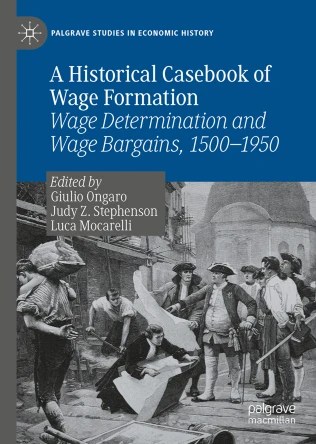
Il volume raccoglie sedici contributi che presentano nuovi casi storici su formazione e contrattazione salariale nel mondo preindustriale e moderno. E’ noto che la letteratura recente ha ravvivato un interesse consolidato per la storia economica della formazione dei salari, sottolineando le lacune ancora esistenti nella nostra comprensione della composizione, quantificazione e processo di strutturazione dei salari. Questo volume intende far luce su questi punti, esaminando diversi argomenti, tra cui pagamenti in natura e in denaro, bonus e supplementi, contratti di lavoro, differenziali tra lavoratori qualificati e non qualificati, lavoro femminile, schiavitù e contratti di lavoro coatto, e salari in una prospettiva sia diacronica che comparata: come la struttura e la composizione dei salari cambiano nel tempo e nello spazio (sia in termini di aree geografiche che di ambienti urbano-rurali). I casi di studio presentati provengono da diverse aree geografiche (dal Sud America all’India) dal periodo preindustriale all’età contemporanea e presentano contributi correlati sul settore manifatturiero, agricolo, minerario e pubblico. Il libro sarà una risorsa preziosa per studiosi e studenti dei mercati del lavoro preindustriali in ambito economico, sociale e di storia del lavoro.
- ‘Zucchero. Una biografia del mondo’
La mostra è aperta a Milano, dal 7 al 23 dicembre 2025, presso la Fondazione “Adolfo Pini“.
“Zucchero. Una biografia del mondo” è la nuova mostra a cura dell’Università degli Studi di Milano-Bicocca che ricostruisce, attraverso cinque secoli di storia, il ruolo dello zucchero nelle grandi trasformazioni economiche, sociali e culturali del nostro mondo. Una vera e propria “rivoluzione bianca”, raccontata attraverso un percorso divulgativo e illustrato.

La mostra sintetizza alcuni dei risultati del progetto DIFFERS – Differently sweet Anthropocene, finanziato nell’ambito del Partenariato Esteso P10 ONFOODS PNRR con fondi della Commissione Europea.
Il progetto è guidato da Laura Prosperi e realizzato insieme a Luca Mocarelli, entrambi docenti di Storia economica del DEMS, con la collaborazione dei ricercatori Giorgio Dell’Oro e Rossella Ierardi.Al progetto partecipa anche Marina Messina, presidente della Fondazione “Adolfo Pini”, che ospita la mostra.
Per maggiori informazioni, clicca qui.
- Seminario “Sergio Zaninelli. Gli studi e l’impegno sociale” (9 gennaio 2026)
Si terrà venerdì 9 gennaio 2026, dalle ore 14.30 alle 17.30, presso l’Aula Negri da Oleggio dell’Università La Cattolica del Sacro Cuore, Largo A. Gemelli, 1 – Milano, un seminario in memoria del prof. Zaninelli dal titolo “Sergio Zaninelli. Gli studi e l’impegno sociale”. Interverranno Pietro Cafaro, Aldo Carera, Giovanni Gregorini e Mario Taccolini. L’incontro sarà coordinato Andrea Maria Locatelli, direttore dell’Archivio “Mario Romani”.
Sono previste brevi testimonianze previamente concordate. Seguirà la celebrazione di una Santa Messa in suffragio presso la Cappella del Sacro Cuore alle ore 18.00.
La locandina
- Ricordando Alberto Cova
Il professor Alberto Cova si è spento a Milano all’età di 93 anni. Docente emerito della Facoltà di Economia dell’Università Cattolica del Sacro cuore, si era laureato nella stessa Università per poi diventare apprezzato collaboratore del professor Mario Romani. La brillante carriera accademica e scientifica lo ha portato a essere Ordinario di storia economica prima all’Università degli studi di Milano e poi all’Università Cattolica. Come storico in continuo dialogo con le teorie economiche si è interessato dell’evoluzione dell’economia italiana nel Novecento pubblicando diversi contributi scientifici sulle politiche economiche, sul ruolo dello stato e degli attori economico-sociali. L’attenzione ai vari aspetti dell’evoluzione dei sistemi economici lo ha portato a coltivare una particolare attenzione agli studi sull’integrazione europea, dal Piano Marshall alla partecipazione dell’Italia alla Ceca. Durante la sua intensa attività di ricerca ha dato un particolare contributo agli studi di storia della banca tra Ottocento e Novecento. Magistrale rimane la sua storia della Cassa di risparmio delle Provincie Lombarde fino al 1945. Ha inoltre curato, insieme ad altri autorevoli studiosi, l’Annale Einaudi di Storia d’Italia sull’evoluzione del sistema bancario nazionale.

Nell’immagine, Alberto Cova. Crediti: https://secondotempo.cattolicanews.it/
Valorizzando gli insegnamenti e gli studi di Mario Romani ha coltivato in maniera pionieristica in Italia il rapporto tra le istituzioni e il cambiamento economico, analizzando in particolare la stagione delle riforme fiscali e amministrative nella Lombardia austriaca e poi napoleonica e in un’ottica neo-istituzionalista ha attentamente individuato l’impatto della formulazione delle “regole” sul funzionamento dell’economia. Nella stessa linea ha sempre dimostrato forte sensibilità per i problemi del lavoro nelle società avanzate. In tutti questi ambiti di studio ha sempre connotato la sua ricerca con un’attenzione scrupolosa nell’uso delle fonti e della bibliografia.
Alberto Cova ha sempre collegato l’attività scientifica con l’impegno accademico e didattico. E’ stato Preside della Facoltà di Economia per sedici anni (1992-2008) curando l’ampliamento dei corsi economico-manageriali nei campus di Roma e Piacenza. Dopo il collega Sergio Zaninelli, ha assunto l’impegno della direzione dell’istituto “Mario Romani” e della rivista scientifica Bollettino per la Storia del movimento sociale cattolico in Italia. Assolvendo a tutti questi incarichi ha mantenuto sempre una profondità di analisi ma pure di confronto con altre metodologie e posizioni diverse. Convinto assertore di una specificità metodologica della Storia economica ha però sempre collocato la disciplina storico economico in dialogo con la economia politica.
Nella sua attività accademica e scientifica ha unito in modo inscindibile, e allo stesso tempo ricco di risultati, la sua identità professionale di studioso e decente all’impegno civile valorizzando la memoria storica come patrimonio culturale per l’azione della società e nell’economia contemporanea.Andrea Maria Locatelli
- Letture: Wars, Depression, and Fascism: Income Inequality in Italy, 1901-1950, di María Gómez-León e Giacomo Gabbuti
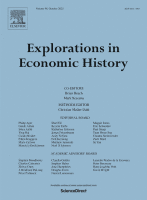
Questo articolo presenta stime annuali della disuguaglianza di reddito in Italia dal 1901 al 1950. Attraverso la costruzione di tabelle sociali dinamiche, sono valutate in modo esaustivo la disuguaglianza in tutti gli aspetti della società italiana e l’Italia è confrontata con altri Paesi nello stesso periodo. In un contesto di disuguaglianza in calo in tutta Europa, l’Italia tra le due guerre rivela una traiettoria in contrasto con le narrazioni consolidate: un forte aumento della disuguaglianza durante la Prima Guerra Mondiale, un’inversione di tendenza nel periodo 1918-1922, una nuova crescita dopo la presa del potere da parte del fascismo e nuovi picchi durante la Seconda Guerra Mondiale. I risultati permettono di identificare significativi shock distributivi a breve termine e di discutere l’economia politica dell’Italia fascista, rafforzando una reinterpretazione delle tendenze della disuguaglianza tra le due guerre in Europa e della natura regressiva dei regimi fascisti. L’articolo è in Explorations in Economic History, Volume 98, October 2025, scaricabile al link https://www.sciencedirect.com/science/article/pii/S0014498325000622
- CfP: Datafication & interoperability in historical archives (deadline 31 December 2025)
Milan, Italy, 11 june 2026
Financial and business archives are undergoing a quiet but profound transformation. As institutions increasingly digitize their holdings, new opportunities for datafication, interoperability, and cross-institutional research are emerging. At the same time, these opportunities bring complex technical, methodological, and ethical challenges—especially concerning data quality, metadata standards, and long-term preservation.
The European Association for Banking and Financial History (eabh) in cooperation with Mediobanca organize a workshop that aims to bring together archival practitioners, data specialists, historians, and digital humanists to discuss how to make historical archival data fit for purpose in an interconnected, digital research environment. The focus is on practical experience, lessons learned, and forward-looking strategies for ensuring that data quality and interoperability remain central to archival work.
Submission Guidelines
Please submit a proposal of max. 300 words, outlining the topic, context, and relevance of your contribution.
Include a short biographical note (max. 150 words) with your name, affiliation, and contact details.
Deadline for submissions: 31 December 2025
Proposals should be sent to: c.hofmann@bankinghistory.orgFor all details about the workshop, please consult the original call for papers at this link.
- CfP: Political economy beyond political economists: understanding political economy in action (1700-1850) (deadline 15 febbraio 2026)University of Geneva, 21-22 May 2026
The workshop examines how economic ideas circulated, evolved and took material form between the late seventeenth and mid-nineteenth centuries—a period marked by interimperial competition, industrialisation and the rising authority of economic reasoning across European society. Recent research has highlighted how debates on wealth, trade and regulation extended far beyond elite circles, involving artisans, merchants, low-level officials, readers, writers and a wide range of overlooked actors. Supported by the SNSF project The Fabric of Profit, the event brings together scholars interested in the connections between economic discourse and practice in science, government, agriculture, manufacturing and commerce. Proposals exploring the reception of economic ideas, the roles of neglected contributors and the interactions that linked intellectual and political elites with practitioners on the ground are particularly wecolme.
The workshop will be held at the University of Geneva. It will start with a keynote on 21 May 2026 at 18:00 GMT followed by panel sessions throughout the day on 22 May 2026 and ending at 16:30 that evening.
The organisers will cover travel expenses and accommodation for participants. Proposals, which should take the form of a 300–500-word abstract accompanied by a short biographical note about the author, should be sent to lorenzo.avellino@unige.ch and jean_baptiste.verot@umlp.fr. The deadline for submissions is February 15th, 2026. Please find the complete call for papers and all related details at this link. - CfP: Between Thompson and the Global: Reflections on Labour History Today (deadline 30 gennaio 2026)University of Warwick, 26-27 June 2026
The workshop entitled “Between Thompson and the Global: Rethinking Labour History Today” will seek to bring together historians of labour to collectively reflect on a large historiographical shift that has taken place over the last two decades, from the social history of labour (in national contexts) to global and trans-national labour history. The social history of labour “from below” is a tradition initiated by E.P Thompson’s The Making of the English Working Class (1963), and extended over several decades by a robust tradition of politically engaged left-wing historical studies of the working classes: a tradition most powerfully entrenched in British historiography (but with many imprints elsewhere, ranging from the United States to Brazil to South Africa to India). The global history of labour, which revised and questioned many of the features of “Thompsonian” history-writing, has sought to overcome “methodological nationalism” in the writing of labour history, to investigate specific labour histories within a global frame, and to enable trans-national histories of workers and work. It has emerged as an increasingly dominant frame of reference for contemporary studies of labour around the world.
We invite scholars from across disciplines to submit 300 word abstracts for pre-circulated papers by 5pm on 30 January 2026, and to submit their papers for pre-circulation by 5 pm on 29 May 2026.
For additional details on the workshop and guidance on how to apply, please consult the call available at the following link.
- CfP: Structure and Change in Economic History, 86th Annual Meeting of the Economic History Association (deadline 31 gennaio 2026)Association St. Louis, Missouri, September 18-20, 2026
Many economists and historians have presented powerful arguments for the importance of institutions in shaping economic outcomes. Distributional considerations are often considered as paramount drivers of institutional change or stasis. Thanks to a rising tide of data, we have made much progress in studying structure—namely, measuring the causal impact of a very wide variety of policies and institutions. We have made far less progress in understanding institutional diffusion or in understanding the persistence of institutions that affect aggregate welfare or inequality. In both cases, these are fundamentally endogenous processes. Our challenge as a discipline is how to bring to bear the methods of causal inference to the process of institutional change over the long term. Meeting this challenge forces us to consider how institutional change is shaped by history, the efforts of individuals and organizations, and economic shocks, including new technologies. We call for research that unites the analysis of which policies or institutions work best, and the circumstances of their adoption. The Program Committee, chaired by Dan Bogart (University of California, Irvine), welcomes submissions on all subjects in economic history, though some preference will be given to papers that fit the theme of the conference. Papers should be submitted individually, but authors may suggest to the Committee that three particular papers fit well together in a panel. Papers should in all cases be works in progress rather than accepted or published work. Submitters should let the program committee know at the time of application if the paper they are proposing has already been submitted for publication. Individuals who presented or co-authored a paper given at the 2025 meeting are not eligible for inclusion in the 2026 program. To submit a paper, use the following link. Paper proposals must include a 1,000-word proposal with a 150–word abstract suitable for publication in the Journal of Economic History. Paper URLs can be provided within the form above, but no attachments will be allowed. Paper proposals should be submitted by January 31, 2026, to ensure consideration. Please note that at least one of the authors must be an active member of the EHA at the time of submission. If you have difficulty with the form, please reach out to Jeremy Land at jeremy.land@helsinki.fi. Graduate students are encouraged to attend the meeting. A poster session welcomes work from dissertations in progress. The poster submission system will open on or before February 1, 2026. Applications for the poster session are due no later than April 15, 2026, online on the meetings website. The dissertation session, convened by William Summerhill (UCLA) and Karen Clay (Carnegie Mellon University), will honor six dissertations completed during the 2025-2026 academic year. The submission deadline is May 31, 2026. The Allan Nevins and Alexander Gerschenkron prizes will be awarded to the best dissertations on North American and non-North American topics respectively. To be eligible for the prizes, you must be a current EHA member at the time of submission. Dissertations should be submitted via the form at the following link. The form will also ask for 150-word abstract to be used for the program, if chosen as a finalist. For files above 10MB, the application form will include a space for a URL or link to download the full dissertation. All submissions will be acknowledged by return email.
For more info, follow this link. - SAVE THE DATE: Incontro ARiSE online (19 dicembre 2025, ore 17:30)
ARiSE organizza un incontro online dedicato al tema “Autonomia, risorse, futuro: che cosa sta accadendo all’Università e alla Ricerca?”, che si terrà venerdì 19 dicembre 2025, dalle ore 17:30, sulla piattaforma Teams.
Dopo i saluti e l’introduzione, interverranno Mario Pianta (Scuola Normale Superiore), Gian Luca Podestà (Università di Parma, Membro del Senato) e Matteo Turri (Università di Milano, Responsabile scientifico MHEO).
E’ previsto uno spazio per interventi programmati di socie e soci.
L’accesso da remoto è possibile attraverso questo link o il QR code presente nella locandina allegata.
- Call for Sessions: XXI World Economic History Congress 2028 “World Powers and Conflicts” (deadline 14 settembre 2026)
The WEAH will convene from 24 to 28 July 2028 in Montevideo, Uruguay. The IEHA has a particular interest in strengthening the scientific approach to the historical and social sciences and in promoting exchange, cooperation, and understanding among all people.
The theme of the Congress is World Powers and Conflicts, which highlights central issues facing humanity today and connects to a broad and diverse range of historical problems, particularly those concerned with resources, inequality, and sustainability, central topics of the last two congresses (Paris and Lund). Sessions may be proposed by any member of the international economic history community, whatever their institutional affiliation or status, as well as by scholars in related disciplines. We strongly encourage proposals from early-career researchers. Sessions can also be proposed by non-national IEHA member organizations. Submissions are welcome on the economic and social histories of all places and periods, and we especially encourage proposals from the global South. Given the diversity of our membership, we will consider any submission that advances the study, teaching, and public presentation of economic history. We welcome panel proposals that highlight emerging scholarship from different fields of economic history, as well as contributions on innovative methodological and theoretical approaches. The 5-day Montevideo Congress will feature approximately 180 sessions, with each day divided into 90-minute blocks (two before and two after lunch). It will be possible to combine two sessions into larger, coherent units. The proposals must make clear whether they apply to one or two blocks.
For additional information or to submit an application, use this link.
- Letture: Mermaids in History. Engendering Maritime Labour and Business History, 1700–1900, a cura di Erica Mezzoli
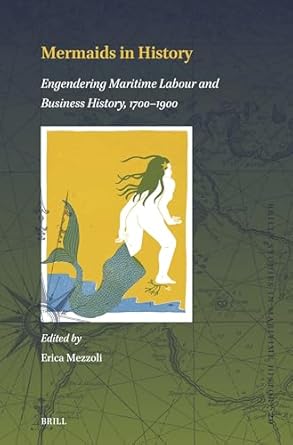
Questo volume si propone di defamiliarizzare la storia marittima economica e sociale dell’Europa e del Nord America, svelando il ruolo delle donne e i loro molteplici contributi nello spazio economico marittimo a predominanza maschile durante la modernità capitalista industriale. Mettendo in discussione il paradigma delle “sfere separate”, i capitoli di questo volume evidenziano l’intricata e “illogica” relazione tra le donne come attrici economiche e il capitalismo (marittimo) e la modernità. Lungi dall’essere una traiettoria netta e lineare, questa relazione è piuttosto delineata come una relazione dialettica stratificata che considera simultaneamente l’interazione tra forme di oppressione e liberazione.
Saggi di: Paola Avallone, Helen Berry, Justine Cousin, Ariana Domínguez García, John Odin Jensen, Kathy S. Mason, Erica Mezzoli, Antònia Morey, Luisa Maria Muñoz Abeledo, Tomas Nilson, Oskar Opassi, Raffaella Salvemini, Daniel J. Albero Santacreu, Andreu Seguí e Jo Stanley. Per altre informazioni si veda il link della casa editrice BRILL
- CfP: Civil Society, Civic Engagement and Its Impact on Military Welfare (deadline 28 febbraio 2026)
Thurs 18 to Sat 20 June 2026 – Babeș-Bolyai University in Cluj-Napoca, Romania In June 2026 the MWHN will host its fifth international conference at Babeș-Bolyai University in the city of Cluj-Napoca in Romania. Established in 1581 and located in Cluj-Napoca, Romania. It occupies the first position in the Romanian University Metaranking, is the largest university in Romania (with 50,000 students) and is home to several members of the MWHN and the now-concluded Romanian Officers in the Habsburg Army and their Involvement in Civil Society (late 18th century to 1918) project (PI: Vlad Popovici). This conference is organised within the framework of Dr Popovivi’s project ‘Intricate Entanglements: Associational life, Nation-building and Democracy in Transylvania. The Romanian Case (18th Century to 1920s)’ and will comprise the following elements.
Schedule of the Event: Day 1 (Thursday 18 June 2026): A welcome keynote (and possibly some panels) followed by a free and catered evening reception Day 2 (Friday 19 June 2026): A full day of parallel panels (including lunch) followed by a free dinner Day 3 (Saturday 20 June 2026): A half-day of parallel panels (including lunch) and a closing keynote Keynotes: Prof Lynn Mackay (Brandon University) Dr Ismini Pells (University of Oxford) The complete call for papers is available at this link. - ‘Money in a time of crisis’, la mostra online sul denaro
E’ disponibile in rete ‘Money in a time of crisis’, la mostra che ripercorre la storia della moneta dai tempi di Tiberio (14-37 d.C) all’attualità. La mostra è curata da Stefano Locatelli, attualmente Marie Curie Fellow presso il Dipartimento di Scienze e Politiche Ambientali dell’Università Statale di Milano, con la collaborazione di Bryan Sitch, Honorary Curator of Numismatics presso il Manchester Museum.
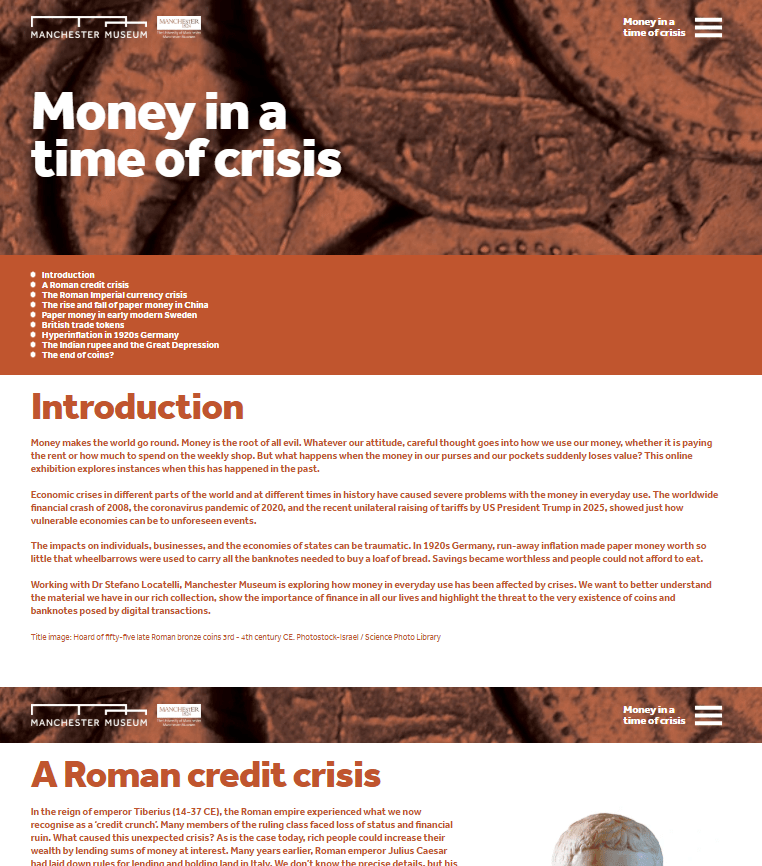
La selezione del materiale (monete, banconote, stampe, etc.), appartenente alle diversi collezioni del Manchester Museum, è stata possibile grazie alla ricerca svolta da Stefano Locatelli nel corso del post-doc ESRC (Economic and Social Research Council) presso l’University of Manchester.
Per vedera la mostra: Money in a time of crisis
 ARiSE
ARiSE 