
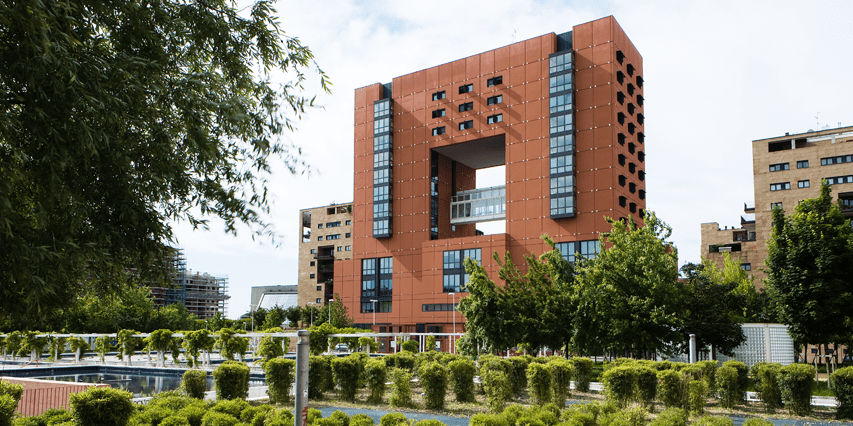
University of Milano-Bicocca, Milan, 16th-17th April 2026.
The Center for Interdisciplinary Studies in Economics, Psychology and Social Sciences (CISEPS) invites scholars to its Fifth Annual Workshop to be held at the University of Milano-Bicocca on 16th-17th April 2026.
The Workshop aims to gather a wide range of papers on the relationship between the trend of economic inequality, its perception, and the development of inclusive or exclusive political institutions, in history and in the contemporary period. The Workshop is organized in connection with the research project “Taxation, Public expenditure, and Economic inequality in preindustrial Venetian Lombardy (1400-1800)”, financed by CARIPLO Foundation (Inequalities Research).
After a partial reconfiguration during the post–World War II economic expansion, in recent decades economic inequality has re-emerged on a centuries-spanning upward trajectory, evident both nationally and internationally. This phenomenon has been paralleled by a burgeoning disillusionment concerning the efficacy of political institutions at both state and local echelons, thereby contributing to the ascension of populist movements and a clamor for authoritative leadership. These trends have garnered increasing scrutiny from social scientists who have investigated the underlying causes of economic inequality, with particular emphasis on the influence exerted by public finances, as well as its ramifications on institutional development. Some scholars argue that democratization may mitigate the growing inequality trend. Inclusive societies often promote redistributive policies, whereas societies characterized by high levels of polarisation tend to have elitist governance structures.
We encourage scholars from various disciplines to submit a proposal addressing the main topic of this workshop, for example, and not exclusively, focusing on the following issues:
1- The impact of inclusiveness of political institutions on the escalation of economic inequality;
2- The role played by public policies in this context, particularly concerning fiscality and the redistributive potential of public expenditure;
3- In contrast, the effects of economic inequality on the influence of political participation;
4- The evolving juridical foundations of the inclusiveness of political institutions in response to shifting levels of inequality;
5- Beyond formal inclusiveness: perceived inequalities and their repercussions on political participation;
6- Vicious or virtuous circles? An examination of how inclusive or exclusive political institutions generate policies that either foster or limit inequality, which, in turn, influence the degree of inclusiveness or exclusiveness of the political institutions themselves.
The papers may cover different historical periods and geographical areas.
The complete call is available at this link.
 ARiSE
ARiSE 